Hazard Intake
Capture job task, impact exposure, cut risk, splash possibility, thermal conditions and current PPE exceptions before products are discussed.

Services are built around a practical problem: teams rarely need a generic catalog, they need a defensible reason to choose one helmet, lens or glove family over another. HexArmor support starts with the task, exposure, incumbent product and documentation requirement, then turns those inputs into a concise specification path.
For hard hats and safety helmets, the review can compare ANSI Z89.1 Type I or Type II needs, electrical class language, chin strap use and accessory compatibility. For eyewear, it can address ANSI Z87.1+ high impact expectations, lens tint, anti-fog coating and face shield pairing. For gloves, it can decode ANSI/ISEA 105 cut levels, EN 388 markings, puncture exposure, grip and impact coverage.
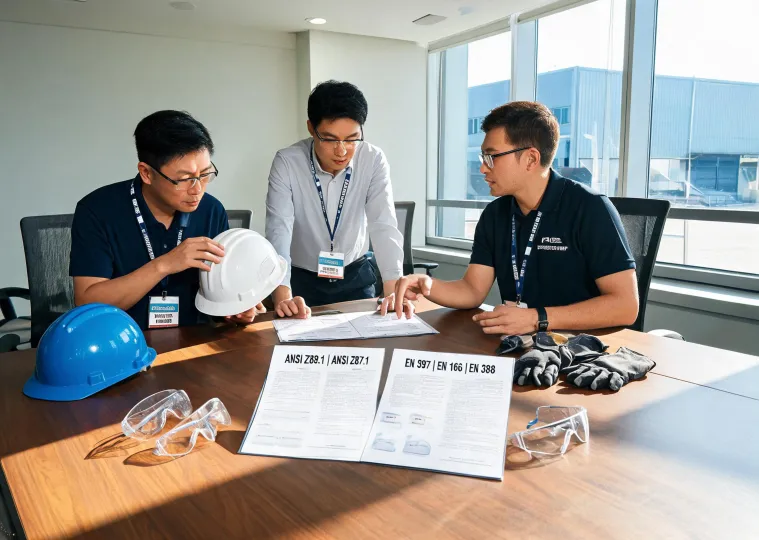
Capture job task, impact exposure, cut risk, splash possibility, thermal conditions and current PPE exceptions before products are discussed.
Map required language to ANSI Z89.1, ANSI Z87.1, ANSI/ISEA 105, EN 388 and related workplace compliance references.
Build a narrow, role-based shortlist of helmet, eyewear and glove options, with notes on fit, replacement cycle and accessory conflicts.
Provide buyer-facing comparison notes, toolbox-talk language and distributor handoff points for controlled implementation.

A Tier-1 manufacturing site needed to reduce glove variation while preserving cut and grip performance for sharp blank handling. The review separated high-frequency handling jobs from maintenance exceptions, mapped cut risk to ANSI/ISEA 105 A4-A7 language, and produced a distributor-ready matrix rather than a one-product mandate. The output made trial feedback easier to compare because every evaluator used the same task and hazard wording.

A field services buyer asked whether safety helmets, hard hat lights and face shields could be standardized across mixed indoor and outdoor crews. The review compared head protection class language, retention needs, accessory mount assumptions and replacement-cycle notes. The final recommendation did not claim universal fit; it defined which crew groups needed separate accessory checks before rollout.
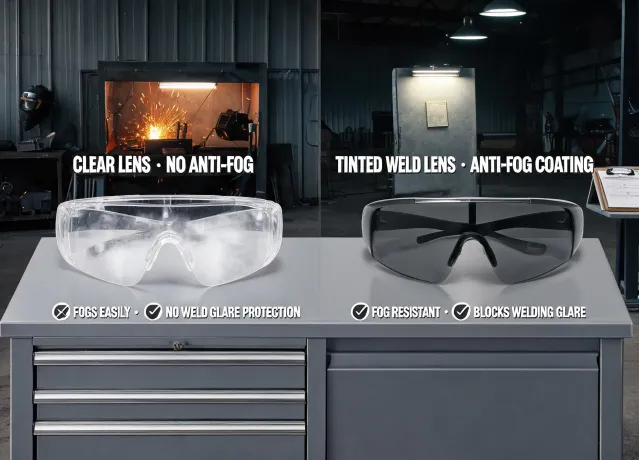
A maintenance organization needed a practical way to compare clear, transition and shaded lens families for indoor-outdoor movement. The support package summarized ANSI Z87.1+ high impact terminology, anti-fog expectations and fit observations. That helped supervisors approve a short list without treating eyewear as a commodity item.
The most useful request includes the task, current PPE, failure mode, standard requirement and whether the decision is for a trial, replacement or bid package. A HexArmor response can organize those inputs into practical next steps for EHS, purchasing and distribution partners.